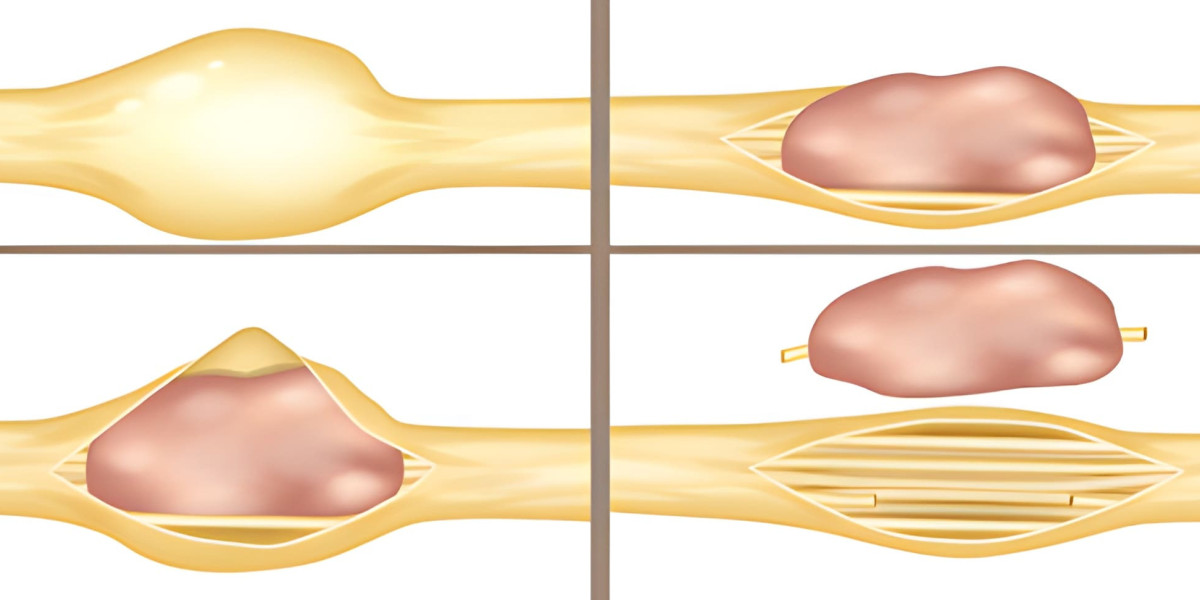

Nerve sheath neoplasms are tumors arising from the protective lining of peripheral nerves, primarily Schwann cells. They may be benign, such as schwannomas and neurofibromas, or malignant, often referred to as malignant peripheral nerve sheath tumors. These tumors can cause nerve compression, chronic pain, and functional impairments. With ongoing research into their epidemiology, treatment responses, and emerging therapies, the Nerve Sheath Neoplasms Market continues to evolve, reflecting both clinical challenges and the development of innovative diagnostic and therapeutic strategies.
Classification and Clinical Presentation
Nerve sheath tumors can appear along any peripheral nerve, including those in the extremities, trunk, head, and neck. Patients often notice a slow-growing, painless mass, though tumors compressing nerves may cause pain or neurological deficits. Benign tumors are usually encapsulated and grow slowly, whereas malignant forms are aggressive and can metastasize. Advanced imaging techniques, particularly MRI and PET scans, allow better differentiation between benign and malignant lesions. Comprehensive Nerve Sheath Neoplasms Market Research has helped improve early diagnosis and refine classification, enhancing patient management strategies.
Pathophysiology and Genetic Insights
Research into the genetic basis of nerve sheath tumors has identified key associations. Many benign neurofibromas are linked to neurofibromatosis type 1 (NF1), caused by mutations in the NF1 gene, while schwannomas often involve NF2 gene alterations. Malignant tumors frequently involve additional mutations in tumor suppressor genes and signaling pathways, promoting uncontrolled cell growth. These findings support targeted treatment approaches and are central to ongoing Nerve Sheath Neoplasms Market Insight efforts focused on molecular therapies and innovative clinical care.
Diagnosis and Treatment Approaches
Diagnosis begins with medical history and physical examination, followed by imaging to assess tumor location and activity, with MRI as the gold standard. Biopsy and histopathology confirm diagnosis. Surgical excision remains the primary treatment for benign tumors and some malignant ones, though complete removal can be challenging when critical nerves are involved. Radiation is applied to inoperable or malignant tumors, while chemotherapy is limited to advanced cases. Evolving surgical techniques, nerve-sparing methods, and reconstructive strategies reflect the Nerve Sheath Neoplasms Market Trends, emphasizing precision medicine and minimally invasive approaches.
Emerging Therapies and Research
Promising treatments include targeted molecular therapies, anti-angiogenic drugs, immunotherapy, and advanced radiation techniques. Pathway inhibitors, such as those targeting Ras/MAPK, mTOR, and VEGF, are under investigation for malignant tumors. Genetic profiling enables tailored treatment strategies. Clinical trials are exploring combined approaches of surgery, radiation, and targeted therapy to enhance survival and reduce recurrence. Analyses of Nerve Sheath Neoplasms Market Size guide investment in the most promising therapeutic developments.
Patient Impact and Healthcare Considerations
Patients may experience chronic pain, numbness, weakness, and functional limitations, affecting daily life and independence. The psychological impact, particularly in hereditary conditions like neurofibromatosis, can be considerable. Rehabilitation and long-term care are often needed. Forecasting within the Nerve Sheath Neoplasms Market Forecast accounts for treatment costs, ongoing care, and patient support needs, informing future healthcare planning.
Conclusion
Nerve sheath neoplasms remain a critical area of clinical focus, with significant variability in presentation, progression, and treatment response. While benign tumors are often manageable, malignant forms present ongoing challenges requiring innovation in diagnostics and therapy. Continued research, multidisciplinary collaboration, and patient-centered care approaches will be essential to improving outcomes and quality of life for affected individuals.
Latest Reports by DelveInsight:
chimeric antigen receptor t cell immunotherapy market | congenital diarrheal disorders market | congenital hyperinsulinism market | coronary angioplasty market | coxsackievirus infections market | developmental and epileptic encephalopathies market | diabetes insipidus market | diabetic eye disease market | diabetic neuropathy market | eosinophilic asthma market | eosinophilic granulomatosis with polyangiitis market | erosive esophagitis market | exanthema market | familial adenomatous polyposis market | familial amyloid polyneuropathy market | familial hypercholesterolemia market | filariasis market | fucosidosis market | galactosemia market | gall bladder cancer market | gastritis market | gastroenteropancreatic neuroendocrine tumors market | gastroesophageal junction adenocarcinoma market | gaucher disease market | global kinase inhibitor market | gluten sensitivity market | gouty arthritis market | growth hormone deficiency market | hepatitis b virus market | hepatocellular carcinoma market | her2+ directed therapies market | her2-positive early breast cancer market | hereditary spastic paraplegias market | herpes simplex virus market | hpv-induced cancers market | human papilomavirus market | huntington's disease market | hypoxia market | idiopathic pulmonary fibrosis market | immune thrombocytopenic purpura market
About DelveInsight
DelveInsight is a leading Business Consultant, and Market Research firm focused exclusively on life sciences. It supports Pharma companies by providing comprehensive end-to-end solutions to improve their performance. It also offers Healthcare Consulting Services, which benefits in market analysis to accelerate the business growth and overcome challenges with a practical approach.
Media Contact
Company Name: DelveInsight Business Research LLP
Contact Person: Abhishek kumar
Email: [email protected]
City: Albany
State: New York
Country: United States
Website: https://www.delveinsight.com