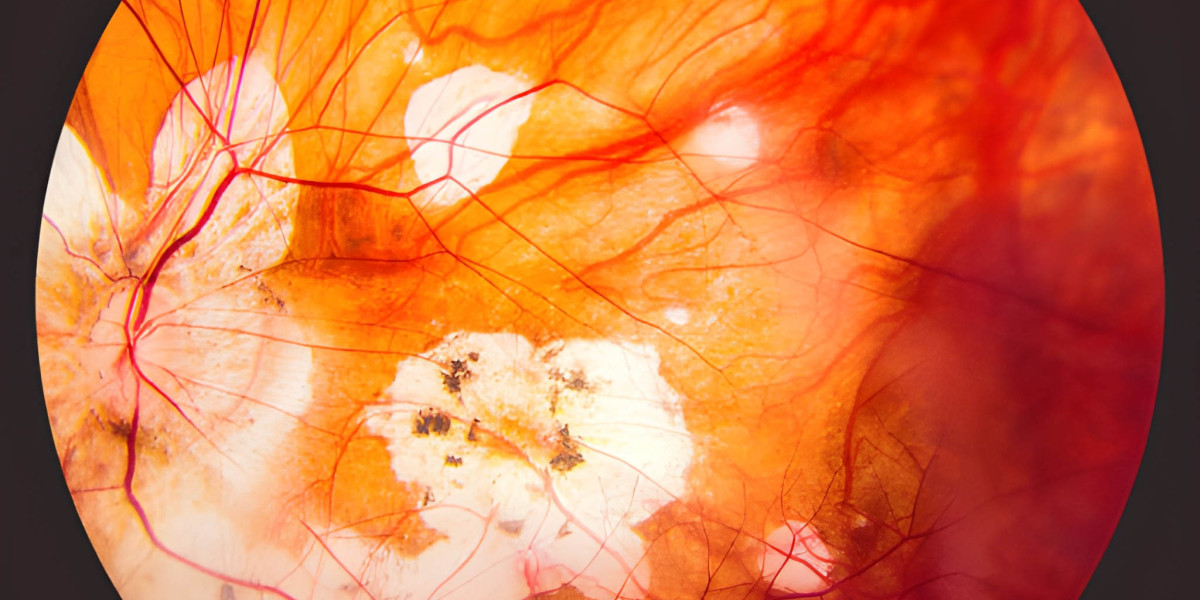

Polypoidal Choroidal Vasculopathy (PCV) is a chronic eye disorder affecting the choroidal blood vessels beneath the retina, often causing recurrent bleeding and fluid accumulation that can lead to severe vision impairment if untreated. Its prevalence is higher in individuals of Asian and African descent, indicating both genetic and environmental factors. Patients typically report blurred vision, dark spots, or distorted vision as the disease progresses. Recent improvements in imaging techniques and targeted therapies have enhanced patient outcomes. Growing interest in research and commercialization has also expanded the Polypoidal Choroidal Vasculopathy Market, reflecting increasing investment in innovative treatments and diagnostic solutions.
Clinical Features and Epidemiology
PCV is characterized by branching vascular networks and aneurysmal bulges, or polyps, beneath the retinal pigment epithelium, which are prone to leakage and bleeding, leading to fluid accumulation and retinal damage. While PCV shares similarities with neovascular age-related macular degeneration (AMD), it often responds more favorably to photodynamic therapy. The disease is more common in individuals over 60, with a slight female predominance, though younger cases occur. Improved imaging techniques, such as optical coherence tomography angiography (OCTA) and indocyanine green angiography (ICGA), have enabled more precise diagnosis and classification. These developments form the basis of comprehensive Polypoidal Choroidal Vasculopathy Market Research, which examines patient demographics, incidence trends, and clinical burden.
Diagnostic Methods and Imaging Innovations
Accurate detection of PCV is essential for treatment planning and prognosis. Fundus examinations may reveal subretinal hemorrhage or orange-red nodules, but ICGA remains the gold standard for visualizing the branching vascular networks and polyps. OCT provides non-invasive imaging to detect pigment epithelial detachments and fluid pockets, while multimodal imaging enables early detection even in ambiguous cases. Emerging AI-assisted imaging tools enhance differentiation from other macular diseases and support personalized treatment approaches. These diagnostic advancements contribute to broader Polypoidal Choroidal Vasculopathy Market Insight, informing adoption rates, regional accessibility, and clinical decision-making.
Therapeutic Approaches and Progress
Management of PCV requires individualized strategies depending on lesion type, severity, and patient response. Anti-VEGF therapy is the primary treatment, controlling neovascular leakage and improving visual outcomes. Photodynamic therapy (PDT) with verteporfin is particularly effective for polyp regression, especially in patients who respond inadequately to anti-VEGF monotherapy. Combination therapy of anti-VEGF and PDT has shown superior outcomes and reduced recurrence. Laser photocoagulation is reserved for extrafoveal lesions due to potential collateral damage. Lifestyle modifications, such as blood pressure management and smoking cessation, may reduce progression. Ongoing clinical trials exploring gene therapy and novel biologics reflect dynamic Polypoidal Choroidal Vasculopathy Market Trends, highlighting innovation in therapeutic strategies and patient-centered care.
Global Impact and Economic Considerations
PCV poses significant clinical and economic challenges, including costs of repeated anti-VEGF injections, diagnostic imaging, and ongoing follow-up care. Limited access to ophthalmic services in certain regions often results in late diagnosis and poorer visual outcomes. Screening programs and educational initiatives help mitigate morbidity by promoting early intervention. Regional disparities in treatment availability necessitate coordinated efforts among healthcare providers, policymakers, and pharmaceutical companies. These factors are incorporated into Polypoidal Choroidal Vasculopathy Market Size analyses, integrating clinical prevalence, healthcare expenditure, and therapy adoption trends.
Research and Future Directions
The management of PCV is moving toward precision medicine, incorporating genetic markers, advanced imaging analytics, and innovative therapeutics targeting vascular pathways. Identification of biomarkers for predicting treatment response allows tailored therapy and minimizes unnecessary interventions. Long-acting anti-VEGF formulations and sustained-release implants may improve adherence and outcomes. Tele-ophthalmology and remote imaging assessments can expand access in underserved regions. Ongoing clinical trials continue to explore combination therapies and next-generation photodynamic technologies with reduced side effects. These advancements inform the Polypoidal Choroidal Vasculopathy Market Forecast, guiding future research, therapeutic accessibility, and clinical practice evolution.
Conclusion
Polypoidal Choroidal Vasculopathy remains a complex retinal disease with profound implications for visual health. Advances in imaging, targeted therapies, and early intervention continue to improve management and outcomes, emphasizing the importance of ongoing research, innovation, and equitable access to care.
Latest Reports by DelveInsight:
chimeric antigen receptor t cell immunotherapy market | congenital diarrheal disorders market | congenital hyperinsulinism market | coronary angioplasty market | coxsackievirus infections market | developmental and epileptic encephalopathies market | diabetes insipidus market | diabetic eye disease market | diabetic neuropathy market | eosinophilic asthma market | eosinophilic granulomatosis with polyangiitis market | erosive esophagitis market | exanthema market | familial adenomatous polyposis market | familial amyloid polyneuropathy market | familial hypercholesterolemia market | filariasis market | fucosidosis market | galactosemia market | gall bladder cancer market | gastritis market | gastroenteropancreatic neuroendocrine tumors market | gastroesophageal junction adenocarcinoma market | gaucher disease market | global kinase inhibitor market | gluten sensitivity market | gouty arthritis market | growth hormone deficiency market | hepatitis b virus market | hepatocellular carcinoma market | her2+ directed therapies market | her2-positive early breast cancer market | hereditary spastic paraplegias market | herpes simplex virus market | hpv-induced cancers market | human papilomavirus market | huntington's disease market | hypoxia market | idiopathic pulmonary fibrosis market | immune thrombocytopenic purpura market
About DelveInsight
DelveInsight is a leading Business Consultant, and Market Research firm focused exclusively on life sciences. It supports Pharma companies by providing comprehensive end-to-end solutions to improve their performance. It also offers Healthcare Consulting Services, which benefits in market analysis to accelerate the business growth and overcome challenges with a practical approach.
Media Contact
Company Name: DelveInsight Business Research LLP
Contact Person: Abhishek kumar
Email: [email protected]
City: Albany
State: New York
Country: United States
Website: https://www.delveinsight.com