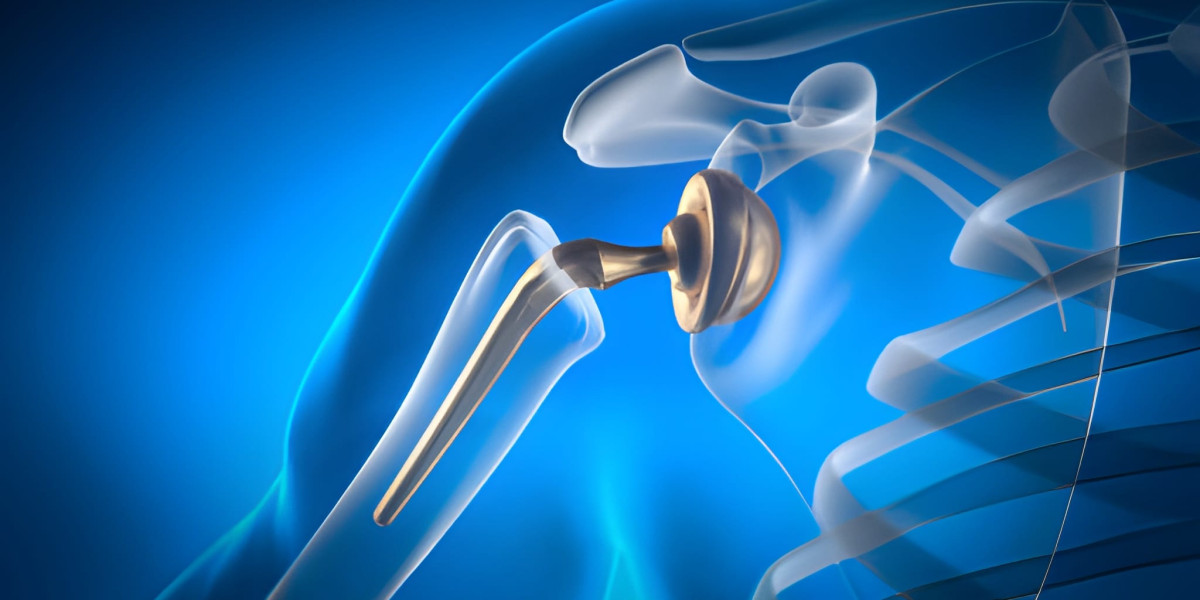

The rising prevalence of shoulder disorders, such as osteoarthritis, rotator cuff tears, and traumatic injuries, has driven demand for surgical interventions that restore mobility and reduce pain. The Shoulder Replacement Devices Market has witnessed notable growth, fueled by advancements in implant technology, minimally invasive procedures, and increasing awareness of joint health. Aging populations and improved clinical outcomes associated with modern prosthetic designs are key factors driving adoption, while innovations in surgical techniques and implant materials continue to enhance performance and longevity.
Mechanism of Shoulder Replacement Devices
The Shoulder Replacement Devices Mechanism is engineered to replicate natural shoulder function by replacing damaged joint components. These devices use combinations of metal, polyethylene, and sometimes ceramic materials to restore rotational and lifting capabilities while alleviating pain. Anatomic and reverse shoulder arthroplasty procedures differ in design, with innovations such as modular implants, patient-specific instruments, and enhanced fixation techniques improving surgical accuracy and reducing post-operative complications. Understanding the mechanics of these devices is essential for ensuring joint stability and optimal functional outcomes.
Types of Shoulder Replacement Devices
Shoulder replacement implants are classified as anatomic or reverse prostheses. Anatomic replacements replicate the natural shoulder structure, maintaining normal biomechanics by replacing the humeral head and glenoid. Reverse shoulder replacements invert the ball-and-socket configuration to compensate for severe rotator cuff deficiencies, improving stability and function in complex cases. Both types leverage biomechanical principles to restore motion and strength, while modern materials such as titanium alloys and highly cross-linked polyethylene increase durability and reduce wear over time.
Market Drivers and Dynamics
The Shoulder Replacement Devices segment is growing due to the increasing incidence of shoulder arthritis, rotator cuff injuries, and the preference for surgical intervention. Adoption of minimally invasive procedures, advanced imaging, and improved post-operative care has enhanced surgical precision and patient satisfaction. Market expansion is also supported by reimbursement policies, regulatory approvals, and growing orthopedic infrastructure worldwide, facilitating broader accessibility and adoption.
Technological Advancements
Recent innovations have improved the efficacy and safety of shoulder implants. Modular designs allow customization based on patient anatomy, while advanced surface coatings like hydroxyapatite and porous titanium promote osseointegration for long-term stability. Computer-assisted surgery, 3D preoperative planning, and patient-specific instruments have increased surgical precision and reduced recovery time. Development of wear-resistant and bioactive materials has extended implant longevity, minimizing the need for revision surgeries and enhancing overall outcomes.
Competitive Landscape
Several Shoulder Replacement Devices Companies are leading innovation in the market through R&D, partnerships, and strategic collaborations. These companies focus on improving device design, simplifying surgical procedures, and enhancing post-operative results. Compliance with regulatory standards and commitment to clinical trials ensures safety and efficacy, fostering continuous advancement in shoulder replacement solutions and benefiting patients globally.
Clinical Applications and Outcomes
Shoulder replacement procedures not only relieve pain but also restore mobility, strength, and function, significantly improving quality of life. Optimized surgical planning and rehabilitation protocols contribute to high success rates. Integration of advanced implant designs with patient-specific approaches allows effective management of various shoulder conditions, from degenerative diseases to complex traumatic injuries, improving overall stability and functional outcomes.
Challenges and Considerations
Despite advancements, challenges remain, including surgical complexity, risk of infection, implant loosening, and complications associated with reverse shoulder arthroplasty. Cost, insurance coverage, and accessibility can limit adoption, particularly in emerging markets. Long-term follow-up and structured rehabilitation are critical for ensuring optimal outcomes. Ongoing surgeon education, patient awareness, and technological innovation are essential to address these challenges effectively.
Future Outlook
The future of shoulder replacement devices is promising, with research focusing on improved biomaterials, implant longevity, and minimally invasive techniques. Robotic-assisted surgery, augmented reality, and patient-specific implants are expected to enhance surgical precision. Digital health tools and real-time monitoring may optimize post-operative care and rehabilitation. As the prevalence of degenerative shoulder conditions rises, the demand for durable and effective joint replacement solutions is projected to grow, driven by continued technological advancements and patient-centered care.
Conclusion
Shoulder replacement devices remain a critical intervention for managing degenerative and traumatic shoulder conditions. Continuous innovation in device design, surgical techniques, and postoperative care has improved outcomes and expanded clinical applications. Advances in research, personalization, and technology are poised to meet the growing global demand for effective joint replacement, enhancing patient quality of life worldwide.
Latest Reports by DelveInsight:
chimeric antigen receptor t cell immunotherapy market | congenital diarrheal disorders market | congenital hyperinsulinism market | coronary angioplasty market | coxsackievirus infections market | developmental and epileptic encephalopathies market | diabetes insipidus market | diabetic eye disease market | diabetic neuropathy market | eosinophilic asthma market | eosinophilic granulomatosis with polyangiitis market | erosive esophagitis market | exanthema market | familial adenomatous polyposis market | familial amyloid polyneuropathy market | familial hypercholesterolemia market | filariasis market | fucosidosis market | galactosemia market | gall bladder cancer market | gastritis market | gastroenteropancreatic neuroendocrine tumors market | gastroesophageal junction adenocarcinoma market | gaucher disease market | global kinase inhibitor market | gluten sensitivity market | gouty arthritis market | growth hormone deficiency market | hepatitis b virus market | hepatocellular carcinoma market | her2+ directed therapies market | her2-positive early breast cancer market | hereditary spastic paraplegias market | herpes simplex virus market | hpv-induced cancers market | human papilomavirus market | huntington's disease market | hypoxia market | idiopathic pulmonary fibrosis market | immune thrombocytopenic purpura market
About DelveInsight
DelveInsight is a leading Business Consultant, and Market Research firm focused exclusively on life sciences. It supports Pharma companies by providing comprehensive end-to-end solutions to improve their performance. It also offers Healthcare Consulting Services, which benefits in market analysis to accelerate the business growth and overcome challenges with a practical approach.
Media Contact
Company Name: DelveInsight Business Research LLP
Contact Person: Abhishek kumar
Email: [email protected]
City: Albany
State: New York
Country: United States
Website: https://www.delveinsight.com